@platform/sdk
The framework-agnostic client your Angular app uses to join the platform — one handshake, then intents, surfaces, modals, and a shared session.
What this is
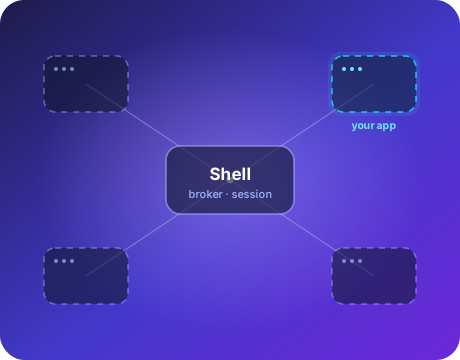
Section titled “What this is”@platform/sdk is the client an app installs to be loaded by the platform shell. Your app runs in its
own iframe; the SDK performs an origin-validated handshake and hands you a small, promise-based client
for everything cross-app: invoking and providing intents, hosting and exposing surfaces, opening
shell-brokered modals, reading the session, and reporting telemetry.
You build an ordinary Angular app. The SDK never imports a UI framework — you wire it into Angular DI through an injection token and keep writing Angular.
Tutorial Install to first render in under fifteen minutes, running standalone before you ever touch a shell.
How-to guides Task recipes: surfaces, modals, intents, roles, routing, and zoneless change detection.
Explanation The mental models: isolation, contracts, the surface/modal/intent/event split, advisory auth, and versioning.
API reference Every app-facing symbol, generated from the SDK source.
A taste
Section titled “A taste”import { bootstrap } from "@platform/sdk";import { standalonePlatform } from "@platform/dev-harness";
void bootstrap({ contract, app: () => import("./app/app").then((m) => m.App), fallback: () => standalonePlatform({ appId: "my-app" }), mountApp: (app, platform) => bootstrapApplication(app, { providers: [{ provide: PLATFORM, useValue: platform }] }),});Authentication appears here only as the SDK surfaces it — the advisory session snapshot and
hasRole() for affordances. Your backend remains the gate; see
Advisory auth vs the backend gate.